THE LITTLE THINGS THAT MAKE A LIFE TOGETHER
There is something quietly profound about the idea that a good marriage is not something that simply happens. It is something two people build, often in ways so small and ordinary that they might go unnoticed by anyone else. Wilfred A. Peterson’s The Art of Marriage is a beautiful reflection on what it means to choose another person, not just on a wedding day, but through all the years that follow. Its words invite us to look beyond the celebration itself and consider what it truly means to build a life together.
A wedding day is filled with beautiful things: flowers chosen with care, thoughtful details, meaningful vows, and the gathering of family and friends. Yet the most important part of the day is also the least tangible. It is the relationship at the centre of it all, shaped by every ordinary day that brought two people to that moment. Peterson’s poem offers a thoughtful reminder that while a wedding can mark the beginning of a marriage, the real art of marriage is found in what happens afterwards.
THE ART OF MARRIAGE
Happiness in marriage is not something that just happens.
A good marriage must be created.
In the art of marriage the little tings are the big things...
It is never being too old to hold hands.
It is remembering to say 'I love you' at least once a day.
It is never going to sleep angry.
It is at no time taking the other fir granted;
The courtship should not end with the honeymoon,
it should continue through all the years.
It is having a mutual sense of values and common objectives.
It is standing together facing the world.
It is forming a circle of love that gathers in the whole family.
It is doing things for each other, not in the attitude
of duty or sacrifice, but in the spirit of joy.
It is speaking words of appreciation
and demonstrating gratitude in thoughtful ways.
It is not looking for perfection in each other.
It is cultivating flexibility, patience,
understanding and a sense of humour.
It is having the capacity to forgive and forget.
It is giving each other an atmosphere in which to groq.
It is finding room for the things of the spirit.
It is a common search for the good and the beautiful.
It is establishing a relationship in which the independence is equal, dependence is mutual and the obligation is reciprocal.
It it not only marrying the right partner, is it being the right partner.
It is discovering what marriage can be, at its best.
[Wilfred A. Peterson]
1. “Happiness in marriage is not something that just happens.”
Peterson begins with a simple but meaningful truth: a lasting marriage requires intention. It is easy to associate a wedding with happiness. There is anticipation, excitement, beautiful surroundings and the feeling of being surrounded by people who have come together to celebrate two lives becoming one. But marriage asks something different of us once the celebration has passed. It asks us to keep showing up. There will be seasons of ease and seasons that require more patience. There will be days when loving someone feels effortless and others when it means listening more carefully, extending grace, or choosing to understand rather than react. The beauty of this opening idea is that it doesn't diminish romance. It gives romance a deeper foundation. Love becomes something more substantial than a feeling; it becomes a practice, shaped by the choices two people make together. A wedding is a promise to begin a life together. A marriage is the ongoing decision to honour that promise, even when life looks different from what either person imagined.
The importance of choosing one another
We often speak about finding the right person as though that is the end of the journey. Yet finding someone with whom we want to share our life is only the beginning. The years that follow ask us to learn how to communicate, navigate differences, support one another through change and remain curious about the person standing beside us. The strongest marriages are not necessarily those without difficulties. They are the ones in which both people remain willing to work through them together. And that work often happens quietly, away from the moments anyone else might see.
2. “In the art of marriage the little things are the big things…”
Perhaps this is the most important idea in the poem. The little things are rarely the moments people imagine when they picture a wedding. They are not necessarily the grand gestures, the elaborate details, or the carefully planned portions of a day. They are the things that happen quietly, often without an audience. A hand reaching for another beneath the table. A familiar smile exchanged across a crowded room. The instinct to move closer when the other person begins to speak. A gentle adjustment of a collar, a reassuring touch on the shoulder, or a laugh shared over something nobody else quite understands. These gestures may seem insignificant in the moment, but they reveal something important about a relationship. They show familiarity, consideration and the comfort of being known.
Why the smallest gestures matter
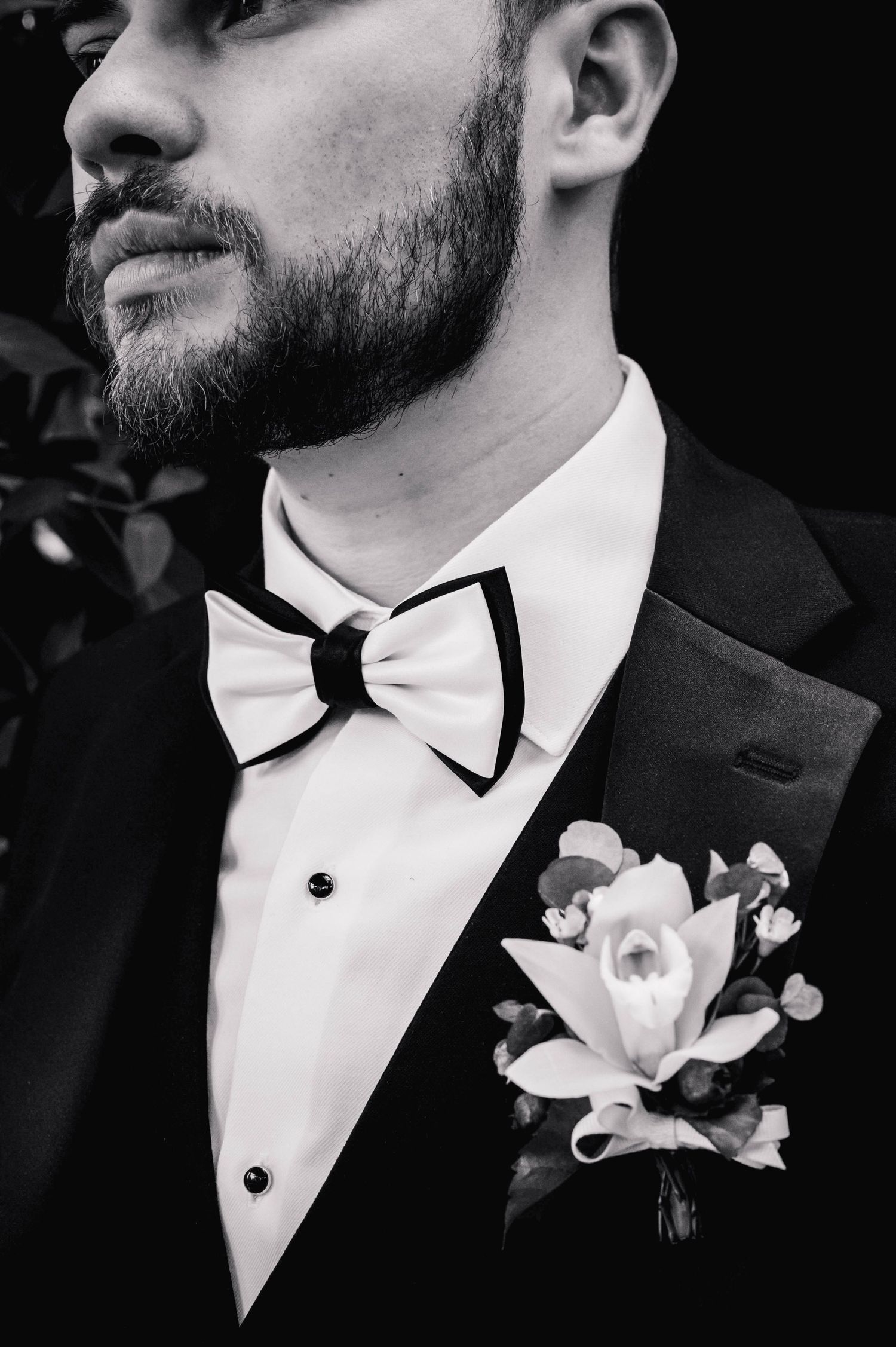
In a long-term relationship, love is often communicated through actions that become so familiar we barely notice them. It is remembering how someone takes their coffee. Knowing when they need a little encouragement. Recognizing the expression that means something is troubling them, even when they haven't said a word. It is making room for their feelings and remembering the details of their life because those details matter to them. These are not the grand romantic gestures we tend to celebrate in films or photographs. They are quieter, more ordinary, and often far more revealing. As a wedding photographer, these are the moments I find myself drawn to. Not because they are dramatic, but because they are honest. They offer a glimpse into the way two people move through the world together. A perfectly composed portrait can be beautiful, but sometimes it is the unplanned interaction between two people that tells us the most about their relationship. The little things are where love becomes visible.
3. “It is never being too old to hold hands.”
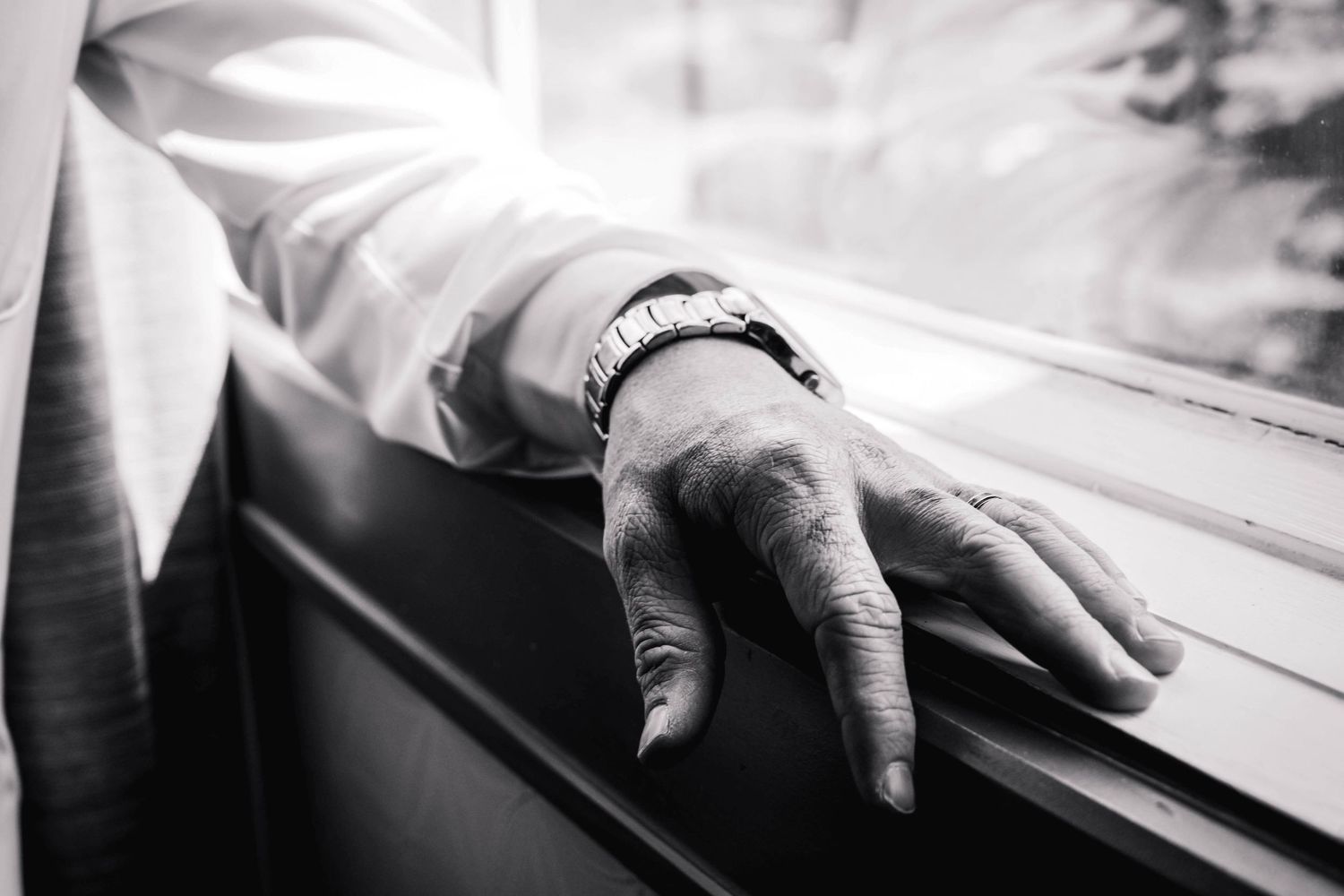
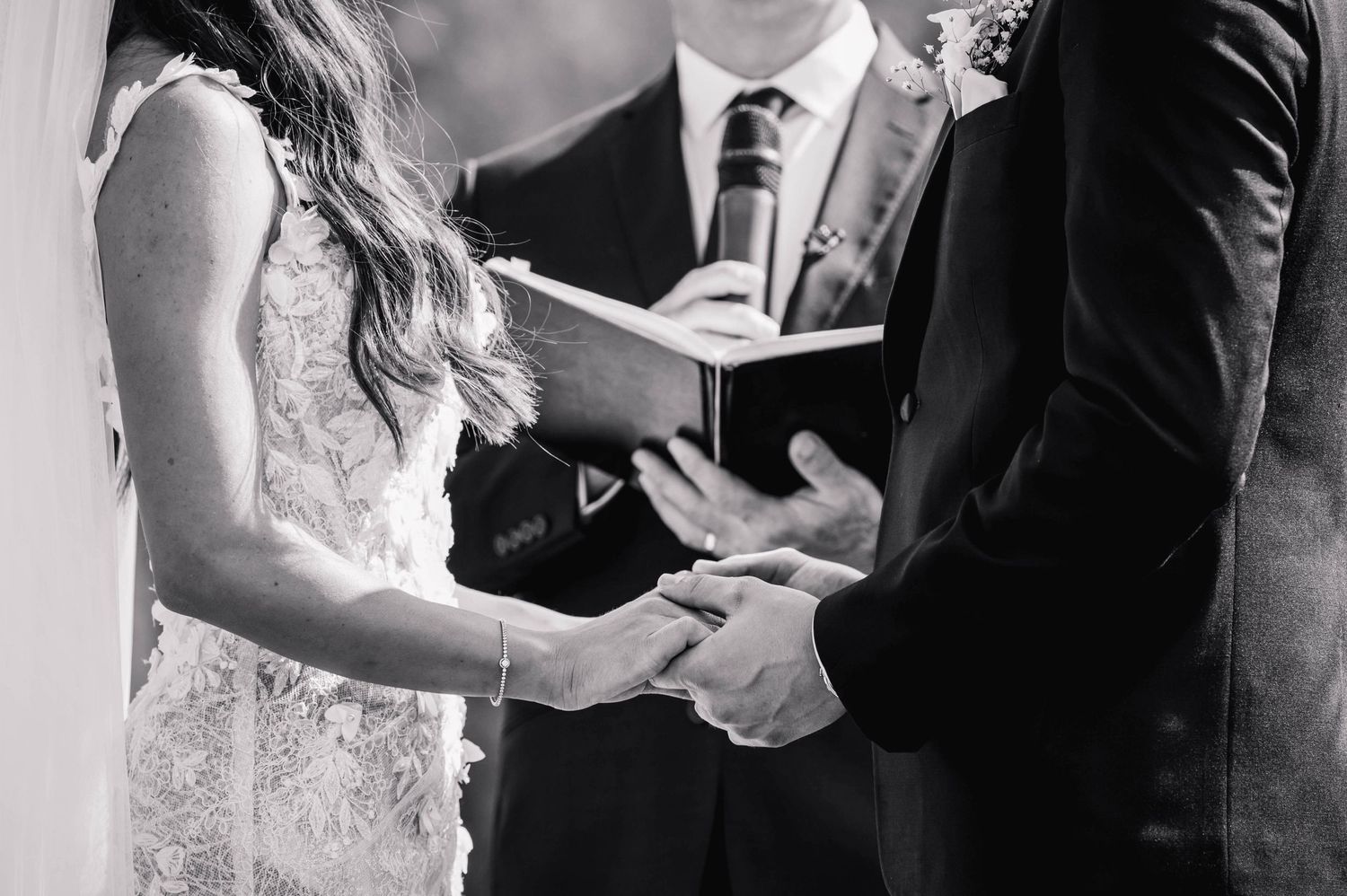
There is a tenderness in this sentiment that extends far beyond the physical gesture itself. Holding hands is one of the simplest expressions of affection, yet it carries a remarkable amount of meaning. It can offer reassurance without words. It can communicate closeness in a crowded room or provide comfort during an uncertain moment. At a wedding, hands appear everywhere if you take the time to notice them. They find each other during the ceremony. They tighten around a bouquet. They reach across a table during a speech. They rest against a partner's back while moving through a room full of guests. These small details are easy to overlook when the day is moving quickly, but they are part of the visual language of a relationship.
Love that continues to evolve
There is something especially lovely about the idea that these gestures do not belong exclusively to the beginning of love. Holding hands is often associated with new romance, when every touch feels full of possibility. Yet there is an entirely different kind of beauty in imagining two people reaching for each other's hands decades later, after building a home, raising a family, navigating difficult seasons and gathering a lifetime of memories between them. The gesture remains simple. Its meaning deepens. A wedding photograph of two people holding hands may seem straightforward, but it also represents something much larger: the promise of continuing to reach for one another as life changes around them. That is a beautiful thing to remember.
4. “It is remembering to say ‘I love you’ at least once a day.”
Love may be the foundation of a marriage, but expressing it is part of how that foundation is maintained. There is a tendency to believe that the people closest to us should simply know how we feel. And while familiarity can bring a wonderful kind of understanding, it should not replace the small, deliberate acts of reassurance that help a relationship feel secure. Sometimes love sounds like three simple words. Sometimes it sounds like asking how someone's day went and genuinely wanting to hear the answer. Sometimes it means remembering a detail they mentioned weeks ago, making space for a difficult conversation, or offering encouragement when they need it most.
The value of being intentional
The poem reminds us that affection is not diminished by repetition. In fact, the things we return to consistently often become the things that matter most. A wedding ceremony gives couples an opportunity to express their love publicly. Marriage gives them countless opportunities to express it privately, in ways that may never be witnessed by anyone else. The words spoken during a ceremony are meaningful because they reflect a commitment. The words spoken in the years afterwards help that commitment remain part of everyday life. There is beauty in both. And perhaps the most meaningful expressions of love are not always the ones delivered in front of a room full of people, but the quiet reassurances offered when nobody else is listening.
5. “It is never going to sleep angry.”
This line invites a little nuance. The sentiment speaks to the importance of resolving conflict rather than allowing resentment to quietly accumulate. It encourages couples to care for their connection, even when they disagree. But a lasting marriage does not require every difficult conversation to be resolved before bedtime. Sometimes emotions need time to settle. Sometimes understanding comes after a night's rest, when both people have had the space to consider what was said and what was meant. What matters is not necessarily reaching an immediate resolution. It is maintaining the willingness to return to one another.
Choosing understanding over winning
It can be tempting, during a disagreement, to focus on proving a point or defending our own perspective. Yet a relationship asks something more of us. It asks us to listen without simply preparing a response. To apologize when we have caused hurt. To communicate honestly about what we need. To remember that understanding someone does not always require agreeing with them. And, perhaps most importantly, to recognize that a disagreement does not have to become a withdrawal of affection. Conflict is a natural part of sharing a life. Two people can love one another deeply and still approach situations differently, carry different expectations, or misunderstand one another. The work lies in learning how to navigate those differences without losing sight of the relationship itself. Sometimes the most loving thing we can do is pause, allow ourselves to settle, and return to the conversation with greater care.
6. “The courtship should not end with the honeymoon, it should continue through all the years.”
There is something wonderfully romantic about the idea that courtship never truly ends. The early days of a relationship often come with a natural sense of curiosity. We ask questions, notice the smallest details, make time for one another, and look for opportunities to bring the other person joy. We are interested in discovering who they are. Over time, life becomes fuller. There may be careers, children, responsibilities, routines, and an endless list of practical things demanding attention. It becomes easy to assume that because we know someone well, there is nothing left to discover. But people continue to grow. Their hopes change, their perspectives deepen and their understanding of themselves evolves.
Keep discovering the person you married
Continuing to court your partner means remaining curious about the person they are becoming. It means making room for conversations that go beyond schedules and responsibilities. It means planning time together, offering thoughtful gestures, and remembering that affection deserves attention even when life is busy. It might mean returning to a place that holds meaning for you both, making an ordinary Tuesday evening feel a little more intentional, or asking a question you haven't thought to ask in years. The point is not to recreate the early days of a relationship exactly as they were. It is to carry that sense of interest and appreciation forward. A honeymoon may be a beautiful beginning, but a marriage is made of all the ordinary days that follow. And there is something deeply romantic about continuing to choose the person you already know, while remaining open to everything you have yet to learn about them.
7. “It is standing together facing the world.”
This line speaks to partnership in its truest sense. Marriage is not simply about two people loving one another. It is about two people learning how to move through life as a team while still allowing each other to remain individuals. Standing together does not mean always agreeing. It does not mean losing yourself in another person or approaching every challenge in exactly the same way. It means recognizing that you are working toward a shared life, and that the relationship itself deserves care and consideration.
What partnership looks like in practice
Sometimes standing together looks like celebrating an achievement and knowing how much it means to the other person. Sometimes it means navigating an unexpected challenge, supporting a difficult decision, or standing beside one another when the path forward is uncertain. It can also be found in the everyday division of responsibilities: the decisions made together, the compromises offered, and the quiet understanding that neither person has to carry everything alone. The most meaningful partnerships leave room for both independence and closeness. Each person is allowed to grow, change, and discover new parts of themselves, while knowing there is someone beside them who wants to understand and support that growth. There is a quiet confidence in that kind of love. Not the confidence that life will always be easy, but the reassurance of knowing you have someone with whom you can face whatever comes next.
8. “It is forming a circle of love that gathers in the whole family.”
One of the beautiful things about a wedding is that it brings together people whose lives have shaped the couple in different ways. Parents, siblings, grandparents, lifelong friends and the people who have witnessed the relationship unfold all become part of the same gathering. Each person arrives with their own memories, their own connection to the couple, and their own understanding of what the day means. A wedding is often described as a celebration of two people, but it can also be a meeting of families, histories and generations.
The people who make the day meaningful
This is especially apparent in the quieter moments: a parent watching during the ceremony, a grandparent reaching for the couple's hands, a sibling offering a knowing smile, or a family member stepping in to help when the day becomes wonderfully chaotic. These interactions are part of the story, too. They remind us that marriage does not happen in isolation. It exists within a wider network of relationships, traditions, and shared experiences. For many couples, building a life together also means building a home in which other people feel welcomed, supported, and loved. And family does not always look the same for everyone. The circle surrounding a couple may include relatives, chosen family, lifelong friends, and the people who have offered care and belonging throughout their lives. What matters is the sense of connection: the people who show up, who celebrate, who support, and who become part of the memories a couple carries forward. The celebration may bring everyone together for a day. The relationships that surround the couple continue long after the last guest has left.
9. “It is doing things for each other, not in the attitude of duty or sacrifice, but in the spirit of joy.”
There is an important distinction here between doing something because we feel obligated to and doing something because we genuinely want to contribute to another person's happiness.
A healthy partnership involves compromise, effort, and responsibility. There will inevitably be moments when one person carries more of the weight, when plans must change, or when supporting a partner requires putting their needs first for a time. But love should not become a running tally of favours given and returned.
The quiet generosity of everyday love
The spirit of joy comes from recognizing that the well-being of your partner matters to you. It might mean making their morning a little easier, remembering something that brings them comfort, or taking care of a task because you know they have had a difficult week. These gestures rarely look extraordinary from the outside. Their meaning comes from knowing the person they are intended for. Perhaps this is part of what makes long-term love so personal. To love someone well is, in part, to learn the small things that make their world feel lighter.
It is understanding what brings them peace, what makes them laugh, and what helps them feel supported. It is learning how to show up for them in ways that feel meaningful rather than simply doing what is expected. The most thoughtful gestures are often those that could only come from someone who truly knows you.
10. “It is speaking words of appreciation and demonstrating gratitude in thoughtful ways.”
Gratitude is one of the simplest ways to remind another person that they are seen. In a long-term relationship, familiarity can sometimes make us less attentive to the things we once noticed immediately. The support that initially felt remarkable can gradually become part of the routine. The small efforts that once inspired a thank-you may begin to feel expected.
This line encourages us to keep noticing. To acknowledge the work someone puts into a shared life. To express appreciation for their patience, their humour, their kindness, or the many things they do that make a home feel like home.
The importance of feeling seen
Gratitude does not need to be grand or carefully orchestrated. Often, its greatest value lies in being specific and sincere. It is the difference between assuming someone knows they are appreciated and taking the time to tell them. It is noticing when your partner has made an effort, acknowledging a kindness that might otherwise go unmentioned, and expressing appreciation for the qualities you admire in them. These small acknowledgements can help prevent the people closest to us from feeling taken for granted. A marriage is strengthened not only by the difficult things two people work through, but also by the ordinary goodness they remember to recognize in each other. Sometimes a simple, heartfelt thank-you can say more than an elaborate gesture ever could.
11. “It is cultivating flexibility, patience, understanding and a sense of humour.”
A life together will rarely unfold exactly as imagined. Plans change. Expectations shift. People grow in unexpected directions. There will be moments when patience is tested and situations that require both partners to reconsider what they thought they knew. Flexibility allows a relationship to adapt rather than fracture under the pressure of change. Patience makes room for each person to move at their own pace. Understanding encourages us to look beyond our own perspective, while humour can offer a welcome reminder that not everything needs to be taken so seriously.
Making room for the unexpected
These qualities are particularly relevant when we think about the wedding day itself. Even the most thoughtfully planned celebration contains unpredictable moments. A schedule might shift. Someone might become emotional at an unexpected time. A carefully arranged detail may not unfold quite as intended. Family members bring their own personalities, histories, and feelings into the room. And often, those unplanned moments become some of the most memorable. There is a particular beauty in the way a wedding day moves when we allow it to be a real gathering of people rather than a performance of perfection. A laugh that interrupts a speech. An unexpected embrace. A moment of happy chaos as family members gather around the couple. The spontaneous interactions that happen while everyone is simply being themselves. These moments remind us that meaning does not always arrive according to a schedule. The same is true of marriage. The goal is not to eliminate every imperfection, but to learn how to meet life's unpredictability together. Sometimes patience is the most generous response. Sometimes flexibility makes room for a better possibility than the one we originally imagined. And sometimes a shared laugh is enough to remind us that we are on the same side.
12. “It is having the capacity to forgive and forget.”
Forgiveness is an important part of any lasting relationship, but it deserves to be understood with care. Sharing a life with another person means encountering moments of disappointment, misunderstanding and hurt. Neither partner will always respond perfectly. There will be times when words are poorly chosen, expectations are unmet, or mistakes are made. A lasting marriage requires the willingness to acknowledge these moments and work towards repair.
Repair is part of love
Forgiveness does not mean pretending something did not happen or dismissing hurt that needs to be addressed. Nor does it mean accepting repeated harmful behaviour without boundaries. Rather, it involves recognizing what has happened, taking responsibility where necessary and deciding how to move forward in a way that allows trust and understanding to grow. Sometimes that process begins with an apology. Sometimes it requires a difficult conversation, a change in behaviour, or time to rebuild a sense of security. The important part is the willingness to approach the relationship with honesty and care. Love is not the absence of mistakes. It is the commitment to respond to them thoughtfully, to learn from them, and to create space for genuine repair. In a marriage, forgiveness can become one of the ways two people learn to know each other more deeply. It asks for humility, compassion and the understanding that both people are still growing.
13. “It is giving each other an atmosphere in which each can grow.”
This may be one of the poem's most quietly significant ideas. Love is often described through togetherness, but a lasting relationship also needs room for individuality. Each person enters a marriage with their own interests, ambitions, friendships, experiences and sense of identity. Some of these things will evolve over time. Others may become more important as life unfolds.
A supportive partnership allows that growth to happen without treating change as a threat.
Growing together without losing yourself
It means encouraging one another's ambitions, respecting individual needs, and understanding that two people do not have to become identical to build a meaningful life together. One partner may discover a new passion. The other may take a different direction professionally. Their interests may change, their priorities may shift, and their understanding of themselves may deepen over the years. A healthy relationship makes room for those changes.
In fact, the strongest relationships often allow difference to enrich the partnership. Each person brings their own perspective, strengths, and experiences, and those differences can expand the life they build together. Marriage is not about becoming one person in every sense. It is about learning how to remain two whole people who continue choosing to share a life. There is something deeply reassuring about being loved by someone who wants you to become more fully yourself, not less.
14. “It is finding room for the things of the spirit.”
This line invites us to consider the deeper values that give a marriage meaning. For some couples, that may be faith or spirituality. For others, it may be a shared sense of purpose, a commitment to kindness, a connection to nature, or the values that guide the way they treat one another and the people around them. Whatever form it takes, the idea is that a meaningful marriage needs room for more than the practical business of living. It needs space for reflection, connection, and the things that remind us why we are building this life together in the first place.
Making space for what matters most
It is easy for daily life to become a series of responsibilities. There are decisions to make, tasks to complete, and practical matters that require attention. Yet a relationship also needs moments that allow two people to reconnect with the values and experiences that bring meaning to their lives. That might be a shared ritual, time spent in nature, conversations about hopes and fears, or the quiet comfort of sitting together without needing to fill the silence.
These moments do not have to be elaborate. They simply need room to exist. A wedding ceremony can be one expression of a couple's deeper values, whether through faith, family traditions, personal vows, or the promises they choose to make. But those values become part of a marriage through the ways they are lived out afterwards. The ceremony gives them words. Everyday life gives them practice.
15. “It is a common search for the good and the beautiful.”
There is something lovely about the idea of two people learning to notice beauty together.
It may be found in travel, art, music, architecture, nature, or the small pleasures of a familiar home. It may be found in the people they surround themselves with, the experiences they choose to share, or the values they hope to pass on to the next generation. A common search does not require identical tastes or interests. Instead, it suggests a willingness to remain curious about what makes life meaningful, both individually and together.
Creating a life that feels like your own
For some couples, this may mean exploring new places and collecting experiences. For others, it may mean building traditions, welcoming friends around the dinner table, or finding joy in a quieter rhythm of life. The beauty lies in discovering what matters to the two of you. A shared life is not simply a collection of responsibilities. It is also an opportunity to create something that reflects your values, interests and hopes. And the things that make that life beautiful may not always be the things that appear impressive to someone else. They may be the ordinary rituals that become uniquely yours. The familiar places you return to. The traditions you create. The memories that grow more meaningful with time. Over the years, these shared experiences become part of the story of a marriage: not because every moment was extraordinary, but because they were experienced together.
16. “It is establishing a relationship in which the independence is equal, dependence is mutual and the obligation is reciprocal.”
This passage offers a thoughtful description of partnership. A lasting marriage needs closeness, but it also needs balance. Both people deserve to have their needs taken seriously, their individuality respected, and their contributions recognized. Mutual dependence does not mean that either person is incapable of standing alone. Rather, it reflects the trust that allows two people to rely on each other while remaining individuals in their own right.
Partnership is not a one-sided responsibility
In a healthy relationship, care moves in both directions. There may be seasons when one partner needs more support than the other. Circumstances change and life rarely distributes its demands evenly at every moment. But over time, both people should feel that their needs, hopes, and well-being matter. Reciprocity is not about keeping score. It is about recognising that a shared life belongs to both people. It means making decisions together, respecting boundaries, and understanding that neither partner should have to carry the emotional or practical responsibility for the relationship alone. This idea is particularly important because love is sometimes romanticized as complete self-sacrifice. Yet a relationship in which one person consistently disappears to accommodate the other is not the same as a partnership built on mutual care. The goal is not to lose yourself in marriage. It is to create a relationship in which both people can feel supported, respected and free to grow.
17. “It is not only marrying the right partner, it is being the right partner.”
This line shifts the focus from finding love to participating in it. It is natural to spend time wondering whether we have found the right person. We consider compatibility, shared values, attraction and the future we imagine building together. But the poem asks us to consider another question: what kind of partner are we choosing to be? Are we willing to listen when something is difficult to hear? Can we recognize when we have made a mistake? Are we prepared to communicate our needs honestly while remaining curious about someone else's? Can we offer the same patience and understanding we hope to receive?
The responsibility we bring to love
Being the right partner is not about achieving perfection. It is about taking responsibility for our part in the relationship. It means remaining open to learning, acknowledging the ways we can do better and understanding that love is not simply something we receive from another person. It is also something we actively contribute. This can be one of the most challenging aspects of marriage because it asks us to look inward as well as outward. It is easier to focus on what a partner should change than to consider where we might need to grow ourselves. Yet a meaningful relationship creates opportunities for both people to become more thoughtful, patient and aware. A marriage is shaped by two people, each bringing their own strengths and imperfections to the shared experience. The work is not to become flawless. It is to keep growing, individually and together, with the understanding that the relationship deserves that effort.
18. “It is discovering what marriage can be, at its best.”
The poem closes with a line that leaves room for possibility. Marriage will mean something slightly different to every couple because every partnership is shaped by the people within it. Their histories, values, hopes, and circumstances will influence the life they build. There is no single picture of what a good marriage must look like. For some, it may be a busy family home filled with conversation and laughter. For others, it may be a quieter life built around shared adventures, creative pursuits and long evenings together. For many, it will be a changing combination of these things, shaped by different seasons of life.
There is no perfect formula
What matters is the intention behind it: the willingness to keep learning about one another, to nurture the relationship, and to create a life that feels meaningful to both people. The poem does not offer a perfect formula for marriage. Instead, it gives us a collection of reminders about the kinds of choices that allow love to deepen over time. It encourages us to look beyond the idea of finding a perfect partner and towards the ongoing work of creating a fulfilling partnership. And perhaps that is why its words continue to resonate. They leave room for the reality that marriage is not a finished achievement on the day two people exchange vows. It is an evolving relationship, shaped by countless decisions, conversations, gestures, and shared experiences. The art is in continuing to learn what that relationship can become.
The Art of Marriage Through the Lens of Wedding Photography
When I think about these ideas through the lens of wedding photography, I am reminded that a wedding day is only one chapter in a much longer story. The ceremony is meaningful. The vows matter. The gathering of family and friends, the thoughtful details and the anticipation surrounding the day all deserve to be remembered. But beneath those visible elements is something quieter: the relationship that brought two people to that moment in the first place.
It can be found in the way they look at each other when nobody is speaking. In the instinctive touch of a hand. In the laughter that interrupts a carefully planned moment. In the familiar ease of two people who know one another well enough to be entirely themselves. These are the moments that often draw me in as a documentary wedding photographer. They do not need to be directed into existence. They happen when people are present with one another, surrounded by the people and emotions that make the day their own.
Why the unplanned moments matter
A wedding day is full of movement, conversation, anticipation and beautiful unpredictability.
There are family members helping each other get ready, friends sharing stories, parents watching their children step into a new chapter and couples finding small moments of connection amid everything happening around them. Sometimes the most meaningful photograph is not the one in which everyone is looking at the camera. It is the moment just before or after, when attention returns to the people who matter most. A quiet exchange during the ceremony. A hand resting on a shoulder. An embrace that lasts a little longer than expected. A spontaneous laugh that breaks through the nerves. These moments reveal something that cannot always be planned: how the day actually felt. Documentary wedding photography is, in many ways, about paying attention to the things Peterson describes. The small gestures. The everyday expressions of care. The connections that unfold naturally when people are simply being themselves. It is not about creating a perfect version of the day. It is about noticing the meaning that is already there.
Photographs as a reminder of what matters
Years from now, couples may return to their wedding photographs and remember the details they carefully chose. They may recall the flowers, the setting, the music, and the feeling of seeing everyone gathered in one place. But I hope they also notice the smaller things. The expression on a parent's face during the vows. The way their partner reached for their hand. The friend who made them laugh when they needed it most. The family interactions that felt ordinary at the time but have become precious with distance. A photograph can bring us back to a moment, but it can also remind us of the relationships that give those moments their meaning. And as the years pass, the images may take on a significance that is difficult to anticipate on the wedding day itself. A photograph of two people holding hands becomes a reminder of the life they have shared. An image of a parent embracing their child becomes a way to revisit a moment that cannot be recreated. A candid photograph of family and friends gathered together becomes a record of the people who were there, the connections they shared and the love that surrounded the beginning of a marriage. This is one of the reasons I value photographs that tell the fuller story of a wedding day. The details are beautiful, but the people are what make them meaningful.
Beyond the Wedding Day: The Little Things That Build a Marriage
Perhaps the most important message in The Art of Marriage is that love is not defined by a single moment. A wedding can be extraordinary. It can be filled with beauty, emotion, anticipation and the feeling that something important is beginning. But the marriage itself is built elsewhere. It is built in the conversations that happen after a long day. In the willingness to listen when something is difficult. In the patience offered when life becomes complicated. In the small gestures of affection that remind another person they are loved. It is built in the effort to understand, the freedom to grow, the ability to laugh together and the decision to keep showing up even when the days are less romantic than the one on which the promises were made. It is also built in the moments that seem too ordinary to remember. A familiar hand reaching across the table. A smile exchanged from opposite ends of a room. A shared joke that makes sense to nobody else. The quiet comfort of being beside someone who knows you well.
These moments may never become a story told at an anniversary dinner. They may not appear in a wedding album or be remembered as significant when they happen. And yet, over time, they become the substance of a shared life. Perhaps this is what makes the poem so enduring. It reminds us that marriage is not about performing love perfectly. It is about practising it in ways that are thoughtful, generous and real.
A Final Thought on the Art of Marriage
The beauty of The Art of Marriage lies in its reminder that a lasting relationship is made of many things: affection, patience, gratitude, forgiveness, independence and a shared willingness to grow. But it begins with something wonderfully simple: paying attention. Paying attention to the person beside you. To what makes them feel understood. To the things they need but may not always know how to ask for. To the ways they change over the years and the ways your life together changes with them. And paying attention to the small moments that might otherwise pass unnoticed.
As a wedding photographer, I am drawn to these moments because they often reveal the heart of a relationship more clearly than anything carefully arranged. They remind me that the most meaningful parts of a wedding day are not always the grandest or most visually striking. Sometimes they are the quietest, most ordinary expressions of connection. The flowers will eventually fade. The music will become a memory. The carefully planned details will give way to the everyday rhythms of married life.
What remains is the relationship. And perhaps the art of marriage is not found in any one grand gesture, but in the accumulation of countless ordinary ones. A hand held. A kindness offered. A laugh shared. A willingness to listen, to forgive, to grow and to keep choosing one another. Not just on the wedding day, but in all the days that follow.